
Spiders of the KZN South Coast
The KZN South Coast, including Pennington, is home to a vast diversity of spider species. While often feared, the majority of our local spiders—like the impressive Golden Orb Web Spider—are harmless to humans and vital to our ecosystem. They are voracious predators of insects like mosquitoes and flies, helping to keep pest populations in check naturally.
Having spiders in your garden is a positive sign of a healthy environment. Below are two informative posters provided by the Spider Club of Southern Africa to help you distinguish between harmless garden visitors and the few medically important species.
15 Common Garden Spiders in South Africa
Includes: Rain Spider, Jumping Spider, Garden Orb Web, and more.

Medically Important Spiders of South Africa
Includes identification for: Black Button, Brown Button, Sac Spider, and Violin Spider.

Local Spider Sightings
A checklist of spider species specifically observed in the Pennington area, populated from our community database.
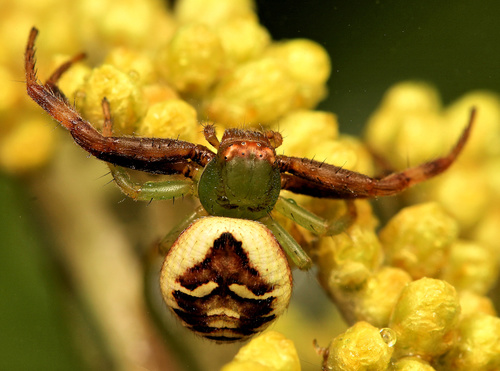
African Mask spider
Synema imitatrix
Synema imitatrix is a species of crab spider in the family Thomisidae. It is endemic to eastern and southern Africa.
Read more on Wikipedia →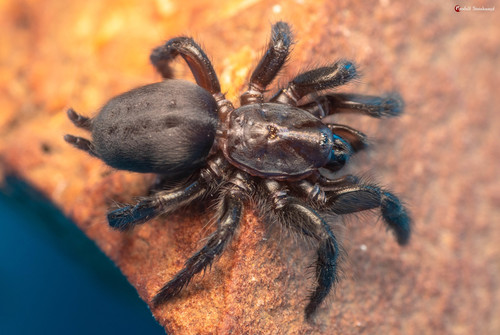
African Open-hole Spiders
Entypesidae
Entypesidae is a family of African mygalomorphae spiders. It was first described in 2020, and includes three genera moved from the funnel-web trapdoor spiders (family Nemesiidae).
Read more on Wikipedia →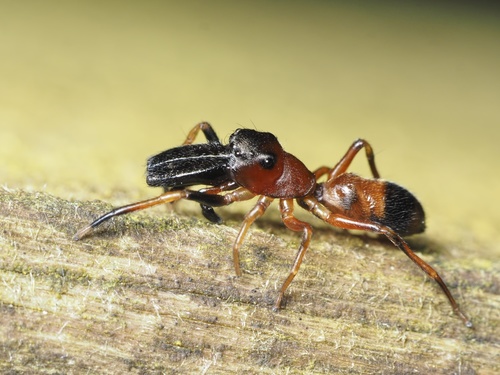
Ant-mimic Spiders
Myrmarachne
Myrmarachne is a genus of jumping spiders which imitate an ant by waving their front legs in the air to simulate antennae. Some species also look strikingly like ants. Spiders in this genus are commonly called antmimicking spiders, although there are many other spiders that mimic ants. Panachraesta used to be a synonym until it was removed and made into its own genus
Read more on Wikipedia →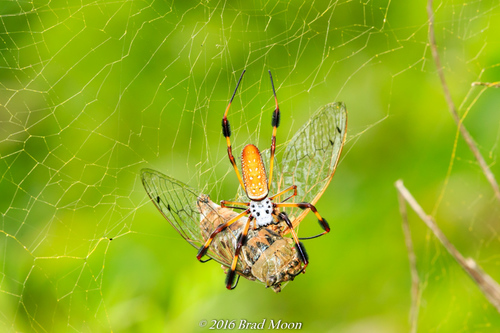
Banded Orbweavers
Trichonephila
Trichonephila is a genus of orb-weaver spiders that was first described by Friedrich Dahl in 1911.
Read more on Wikipedia →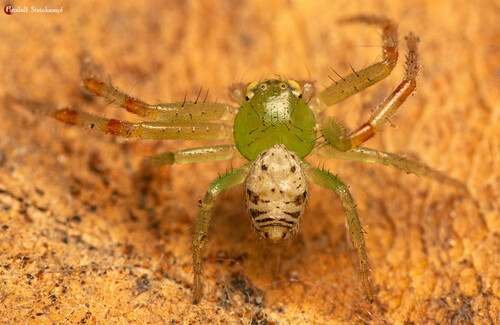
Banded Synema's Crab Spider
Synema diana
No description available.
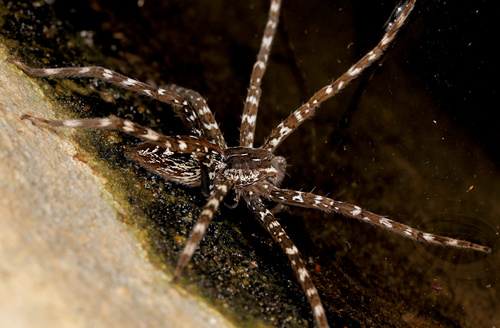
Bandyleg Fisheating Spider
Nilus curtus
No description available.
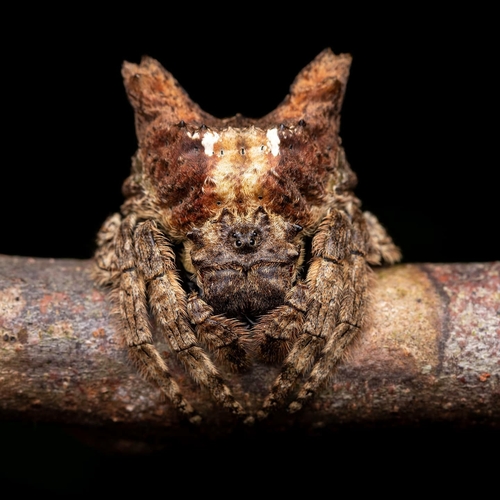
Bark Spiders
Caerostris
Caerostris is a genus of spiders in the Araneidae family. They are sometimes called bark spiders. The genus Caerostris was created by the noted Swedish arachnologist Tamerlan Thorell (1830-1901) in 1868. Most species are found in south eastern Africa and neighbouring Madagascar.
Read more on Wikipedia →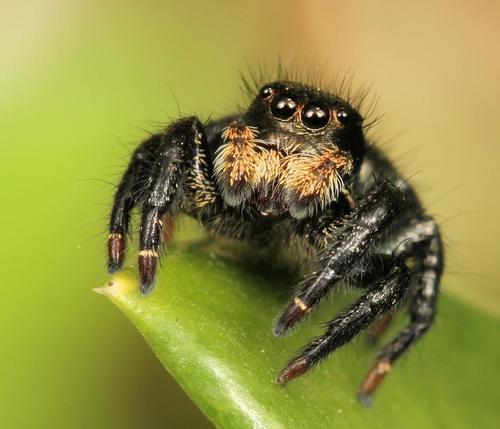
Baryphas Jumping Spider
Baryphas ahenus
No description available.
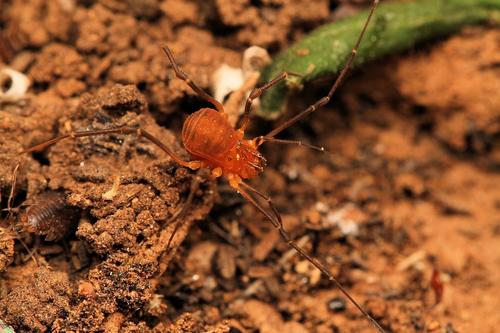
Biantid Harvestmen
Biantidae
Biantidae is a family of the harvestman infraorder Grassatores with about 130 described species.
Read more on Wikipedia →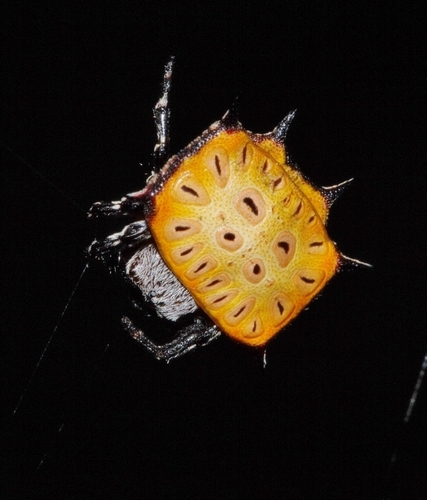
Biscuit Boxkite
Isoxya tabulata
Isoxya tabulata is a species of spider in the family Araneidae. It is found in Africa and is commonly known as the yellow Isoxya box kite spider.
Read more on Wikipedia →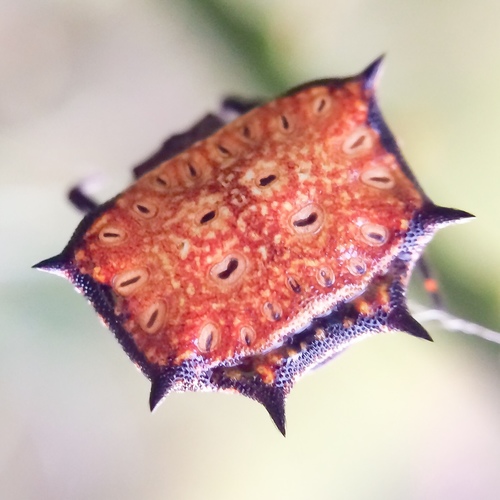
Boxkite Spiders
Isoxya
Box kite spiders (Isoxya) is a genus of Afrotropical orb-weaver spiders first described by Eugène Simon in 1885. Like the spiny orb-weavers they have six prominent (but short) spines on their abdomen. They are small spiders, measuring 3 to 7 millimetres (0.12 to 0.28 in) across. They have a sclerotised (or porcelain-like) abdomen which is typical of the Gastricanthinae.
Read more on Wikipedia →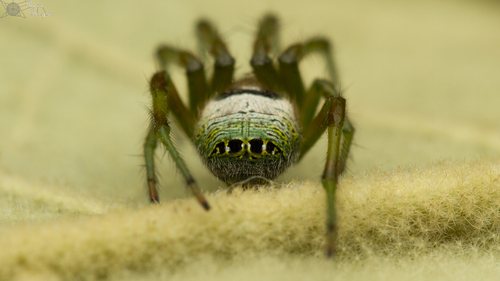
Bum-eyed Spider
Bijoaraneus legonensis
Bijoaraneus legonensis is a species of orb-weaver spider in the family Araneidae. It is found in Ghana, South Africa, and Thailand.
Read more on Wikipedia →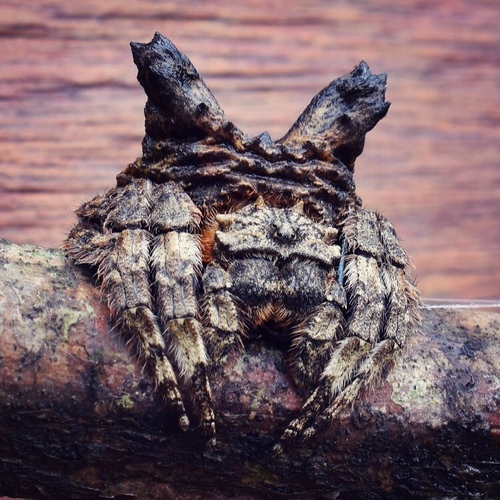
Common Bark Spider
Caerostris sexcuspidata
Caerostris sexcuspidata aka the common bark spider occurs in Southern Africa, and on islands off the east coast of Africa, such as Madagascar, the Comores and Aldabra Island. It is a nocturnal orb-web spider, the female constructing a large orb web some 1.5 metres across, stretching between trees or shrubs. Its dorsal surface is cryptically coloured with horny projections which aid in camouflage; legs are drably coloured seen from above and clearly zebra-striped when viewed from...
Read more on Wikipedia →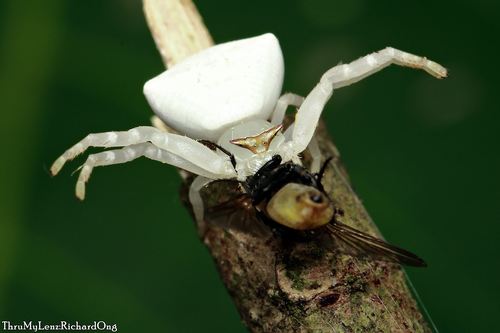
Common Crab Spiders
Thomisus
Thomisus is a genus of crab spiders (family Thomisidae) with almost 150 species described. The genus includes species that vary widely in their ecology, but the best known crab spiders are those species that people call the flower crab spiders, because they are ambush predators that feed on insects visiting flowers. The flower crab spiders are the species for which the popular name was coined, because of their crab-like motion and their way of holding their...
Read more on Wikipedia →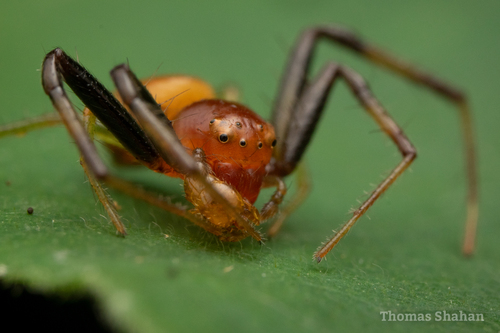
Diaeini
Diaeini
No description available.
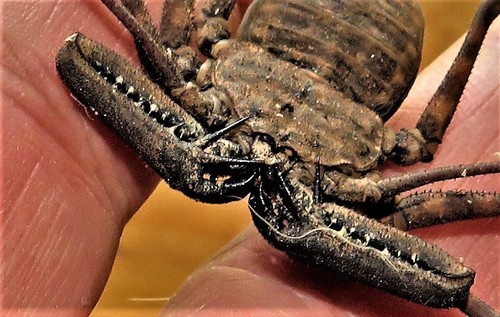
Eastern Whipspider
Damon annulatipes
No description available.
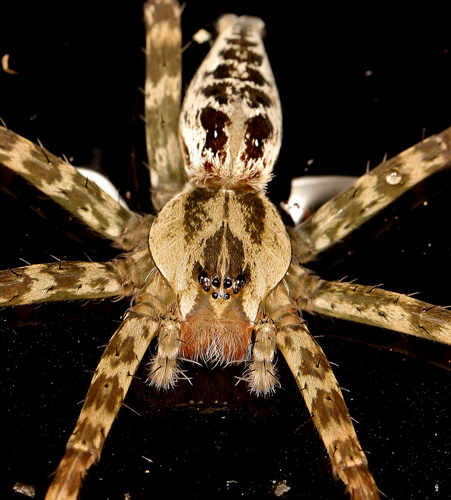
Fisheating Spiders
Nilus
Nilus is a genus of spiders in the Pisauridae family. It was first described in 1876 by O. Pickard-Cambridge. As of 2017, it contains 19 species.
Read more on Wikipedia →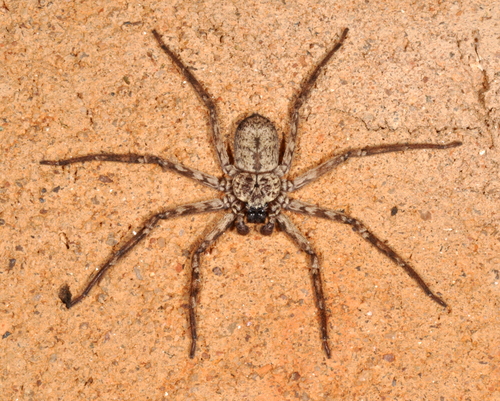
Flatties
Selenopidae
The Selenopidae are a family of araneomorph spiders, sometimes called wall crab spiders, but also wall spiders and flatties . The Selenopidae are one of several families whose English name includes the phrase "crab spider".
Read more on Wikipedia →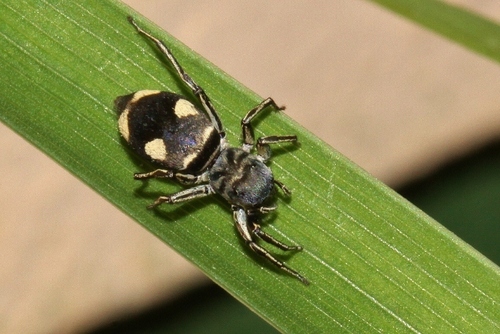
Four-spot mexcala ant-mimic jumping spider
Mexcala quadrimaculata
No description available.
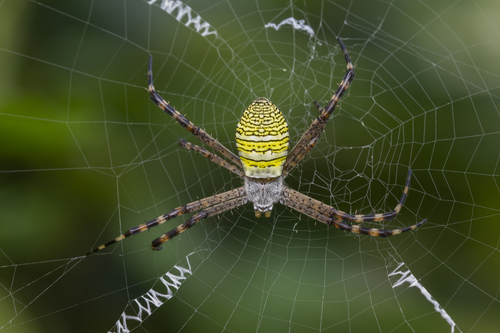
Garden Orbweavers
Argiope
The genus Argiope includes rather large spiders that often have a strikingly coloured abdomen. These spiders are distributed throughout the world. Most countries in tropical or temperate climates host one or more species that are similar in appearance. The etymology of Argiope is from a Greek name meaning "silver-faced".
Read more on Wikipedia →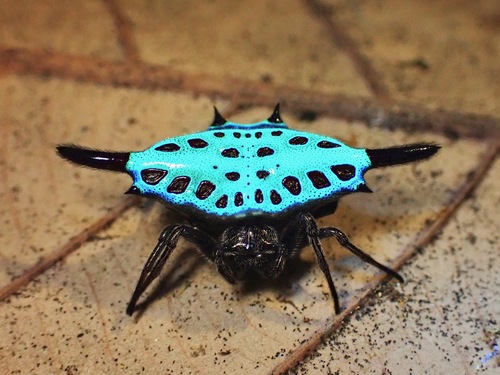
Gasteracanthinae
Gasteracanthinae
No description available.
Giant water spider
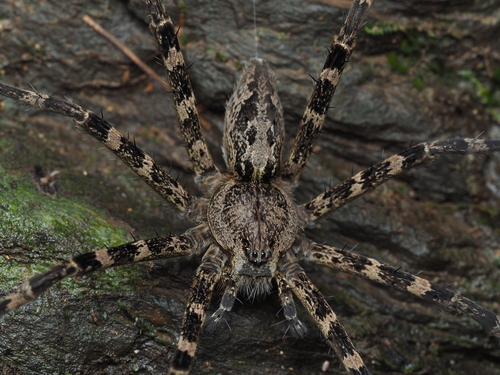
Megadolomedes trux
Megadolomedes trux is a species of spider endemic to Australia in the family Dolomedidae.
Read more on Wikipedia →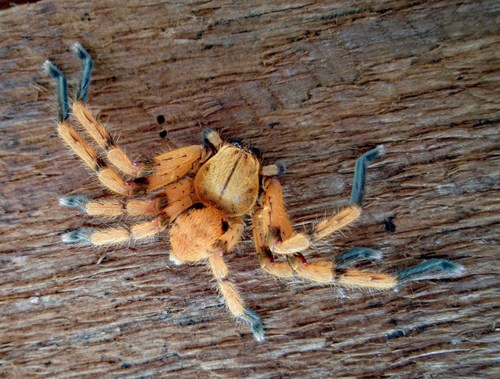
Golden Huntsman Spiders
Olios
Olios is the largest genus of huntsman spiders, containing 250 species. They are found throughout the world, with most species occurring in hot countries. The genus was first described by Charles Athanase Walckenaer in 1837.
Read more on Wikipedia →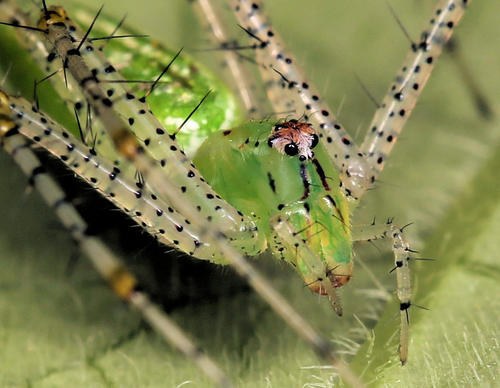
Green Lynx Spiders
Peucetia
Peucetia is a genus of lynx spiders that is found worldwide.
Read more on Wikipedia →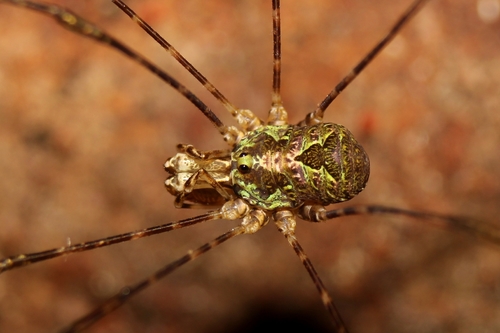
Harvestmen
Opiliones
The Opiliones /oʊˌpɪliˈoʊniːz/ or /ɒˌpɪliˈoʊnɛz/ (formerly Phalangida) are an order of arachnids colloquially known as harvestmen, harvesters or daddy longlegs. As of April 2017, over 6,650 species of harvestmen have been discovered worldwide, although the total number of extant species may exceed 10,000. The order Opiliones includes five suborders: Cyphophthalmi, Eupnoi, Dyspnoi, Laniatores, and the recently named Tetrophthalmi.
Read more on Wikipedia →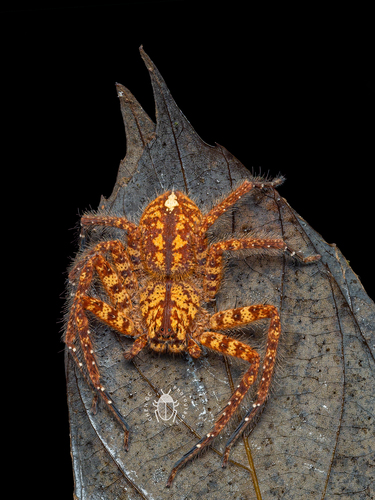
Huntsman Spiders
Sparassidae
Huntsman spiders, members of the family Sparassidae (formerly Heteropodidae), are known by this name because of their speed and mode of hunting. They also are called giant crab spiders because of their size and appearance. Larger species sometimes are referred to as wood spiders, because of their preference for woody places (forests, mine shafts, woodpiles, wooden shacks). In southern Africa the genus Palystes are known as rain spiders or lizard-eating spiders. Commonly they are confused with...
Read more on Wikipedia →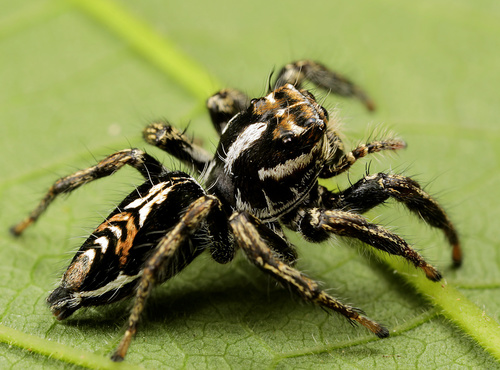
Hyllus argyrotoxus
Hyllus argyrotoxus
No description available.
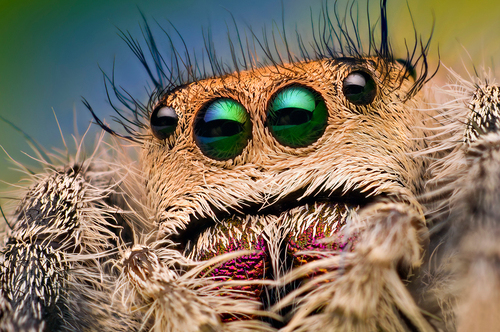
Jumping Spiders
Salticidae
The jumping spider family (Salticidae) contains over 600 described genera and more than 5800 described species, making it the largest family of spiders with about 13% of all species. Jumping spiders have some of the best vision among arthropods and use it in courtship, hunting, and navigation. Although they normally move unobtrusively and fairly slowly, most species are capable of very agile jumps, notably when hunting, but sometimes in response to sudden threats or crossing long...
Read more on Wikipedia →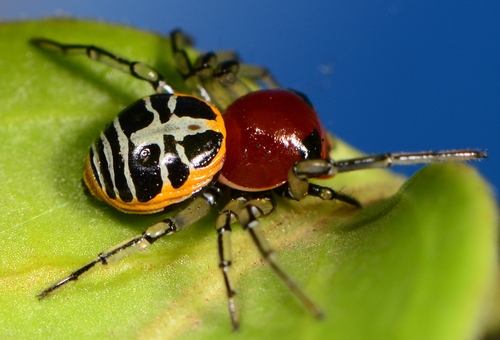
Ladybird Crab Spider
Camaricus nigrotesselatus
Camaricus nigrotesselatus is a species of crab spider in the family Thomisidae. It is commonly known as the ladybird crab spider. The species is found in Southern Africa.
Read more on Wikipedia →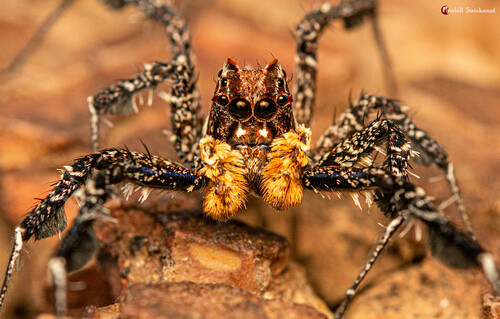
Longleg Dandy
Portia schultzi
Portia schultzi is a jumping spider which ranges from South Africa in the south to Kenya in the north, and also is found in West Africa and Madagascar. In this species, which is slightly smaller than some other species of the genus Portia, the bodies of females are 5 to 7 mm long, while those of males are 4 to 6 mm long. The carapaces of both sexes are orange-brown with dark brown mottling, and covered with dark...
Read more on Wikipedia →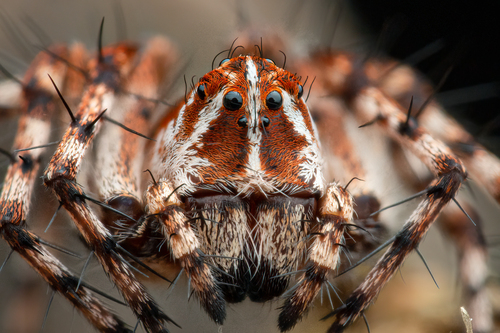
Lynx Spiders
Oxyopidae
Lynx spider is the common name for any member of the family Oxyopidae. Most species make little use of webs, instead spending their lives as hunting spiders on plants. Many species frequent flowers in particular, ambushing pollinators, much as crab spiders do. They tend to tolerate members of their own species more than most spiders do, and at least one species has been identified as exhibiting social behaviour.
Read more on Wikipedia →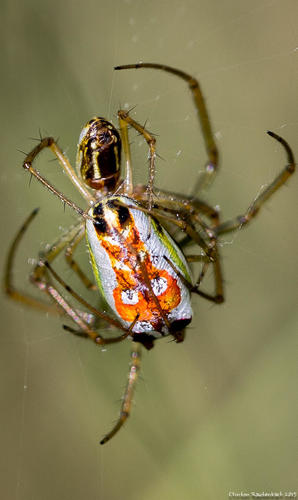
Masked Vlei Spider
Leucauge festiva
Leucauge festiva is a species of spider in the family Tetragnathidae. It is commonly known as the festiva silver vlei spider.
Read more on Wikipedia →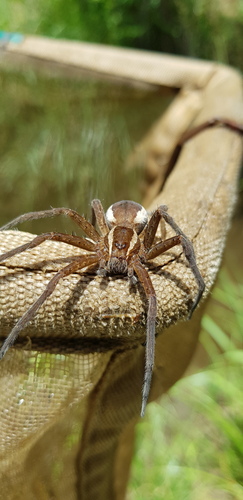
Massaja Nilus Fish-Eating Spider
Nilus massajae
Nilus massajae is a spider species in the family Pisauridae. The species is commonly known as the Massajae Nilus fish-eating spider.
Read more on Wikipedia →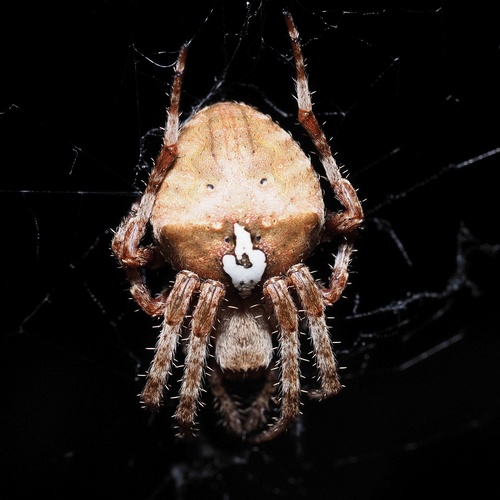
Orbweavers
Araneidae
Orb-weaver spiders are members of the spider family Araneidae. They are the most common group of builders of spiral wheel-shaped webs often found in gardens, fields, and forests. The English word "orb" can mean "circular", hence the English name of the group. Araneids have eight similar eyes, hairy or spiny legs, and no stridulating organs.
Read more on Wikipedia →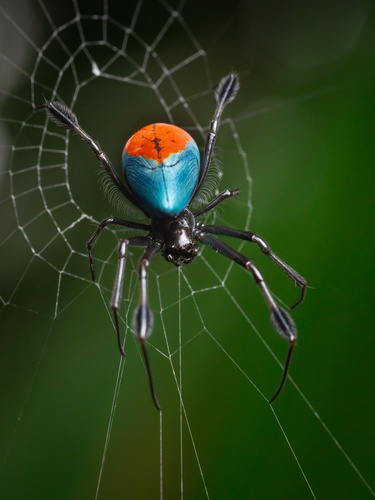
Orchard Spiders and Allies
Leucauge
Leucauge (loo-kah-gee) is a spider genus of long-jawed orb weavers, with more than 170 species and fully pantropical distribution.
Read more on Wikipedia →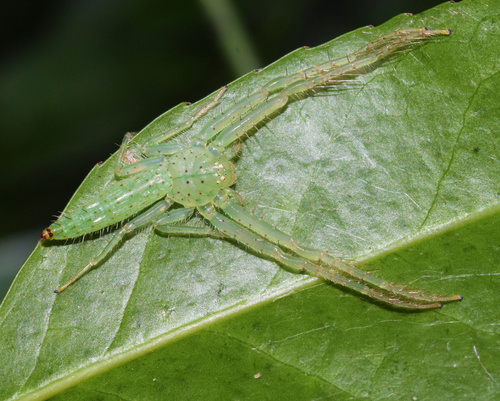
Oxytate argenteooculata
Oxytate argenteooculata
Oxytate argenteooculata is a spider in the family Thomisidae. It is found in Central Africa, East Africa, and Southern Africa, and is commonly known as the spikey green Oxytate crab spider.
Read more on Wikipedia →
Pelargonium Flower-spiders
Pelargonium Flower-spiders
Not found on iNaturalist.
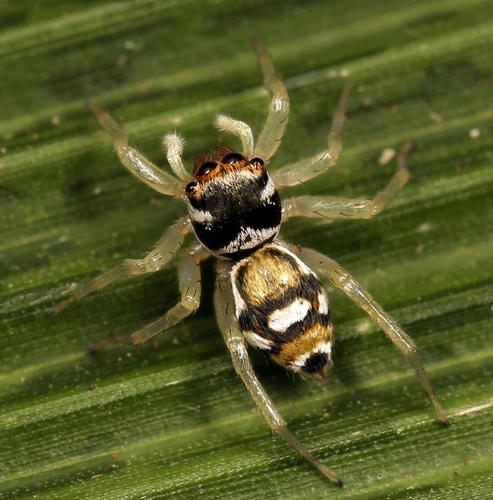
Phintella aequipes
Phintella aequipes
No description available.
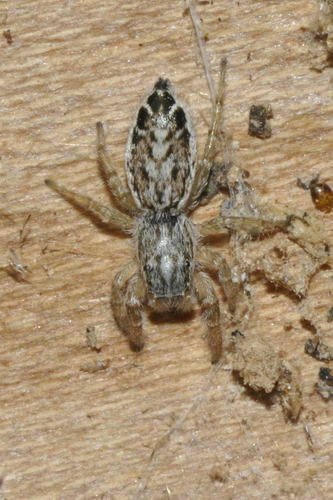
Pseudicius
Pseudicius
Pseudicius is a spider genus of the Salticidae family (jumping spiders).
Read more on Wikipedia →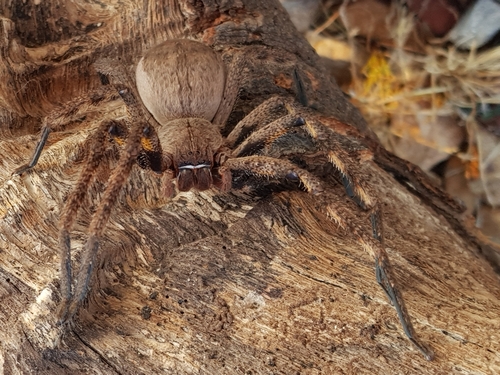
Rain Spiders
Palystes
Palystes is a genus of huntsman spiders, commonly called rain spiders or lizard-eating spiders, occurring in Africa, India, Australia, and the Pacific. The most common and widespread species is P. superciliosus, found in South Africa, home to 12 species in the genus. The name Palystes is derived from either the Latin palaestes or the Greek palaistes, meaning "wrestler". The genus was first described by Ludwig Carl Christian Koch in 1875.
Read more on Wikipedia →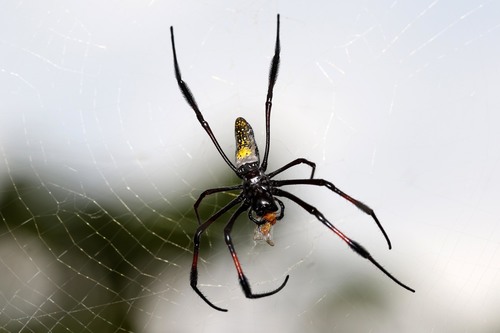
Redleg Orbweaver
Trichonephila inaurata
Trichonephila inaurata, synonym Nephila inaurata, commonly known as the red-legged golden orb-weaver spider or red-legged nephila, is a species of spider of the genus Trichonephila. It is native to southern and East Africa, as well as several islands of the western Indian Ocean (Madagascar, the Seychelles, Réunion, Mauritius, Rodrigues).
Read more on Wikipedia →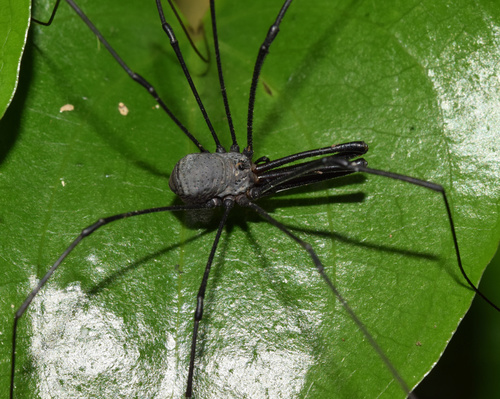
Rhampsinitus
Rhampsinitus
Rhampsinit (also called Rhampsinitos, Rhampsinitus, Rampsinitus, Rampsinit, derived from Herodotus' Greek Ῥαμψίνιτος Rhampsínitos) is the hellenized name of a fictitious king (pharaoh) from Ancient Egypt. He is named by the ancient Greek historian Herodotus as a literary figure in his Historiae. There it is told that Rhampsinit was the predecessor of the legendary king Kheops. The first tale of Rhampsinit is about two thieves who rob the king until one of them dies. His brother tries...
Read more on Wikipedia →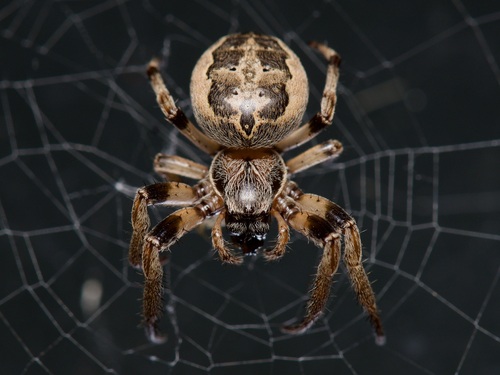
Spiders
Araneae
Spiders (order Araneae) are air-breathing arthropods that have eight limbs, chelicerae with fangs generally able to inject venom, and spinnerets that extrude silk. They are the largest order of arachnids and rank seventh in total species diversity among all orders of organisms. Spiders are found worldwide on every continent except for Antarctica, and have become established in nearly every land habitat. As of November 2023, 51,673 spider species in 136 families have been recorded by taxonomists. However,...
Read more on Wikipedia →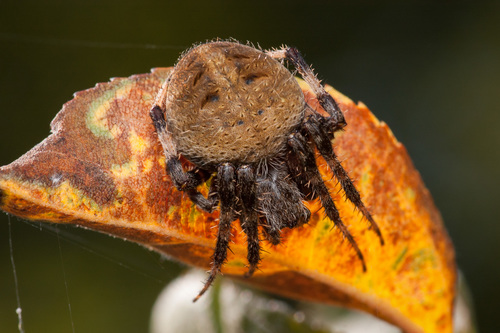
Spotted Orbweavers
Neoscona
Neoscona, known as spotted orb-weavers and barn spiders, is a genus of orb-weaver spiders (Araneidae) first described by Eugène Simon in 1895 to separate these from other araneids in the now obsolete genus Epeira. They have a mostly pantropical distribution and one species, Neoscona adianta, has a palearctic distribution. As of April 2019 there are eight species that can be found in the United States and Canada:
Read more on Wikipedia →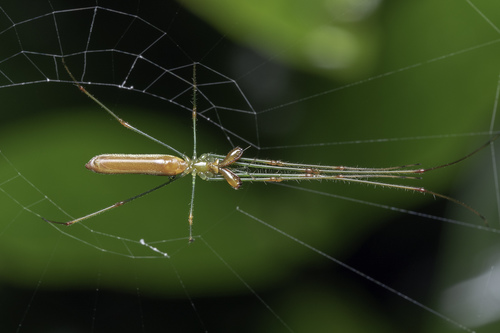
Stretch Spiders
Tetragnatha
Tetragnatha is a genus of spiders containing hundreds of species. They are found all over the world, although most occur in the tropics and subtropics. They are commonly called stretch spiders, referring to their elongated body form. When disturbed they will stretch their front legs forward and the others in the other direction, thus being able to hide on blades of grass or similar elongated substrates. They are able to run over water.
Read more on Wikipedia →
Synema
Synema
Synema is a genus of spider in the family Thomisidae, found in most parts of the world.
Read more on Wikipedia →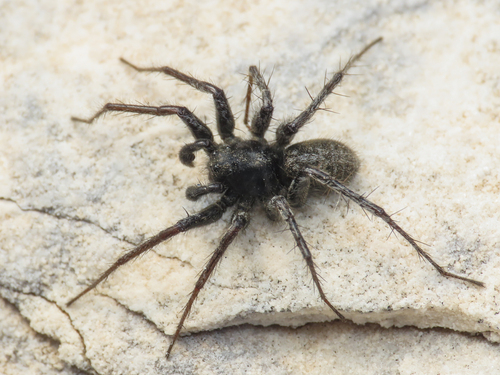
Thin-legged Wolf Spiders
Pardosa
Pardosa is a large genus of wolf spiders, with more than 500 described species that are found in all regions of the world.
Read more on Wikipedia →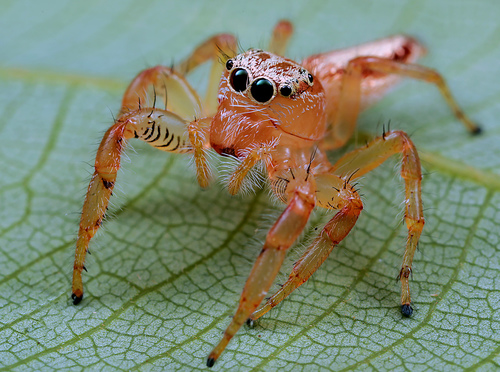
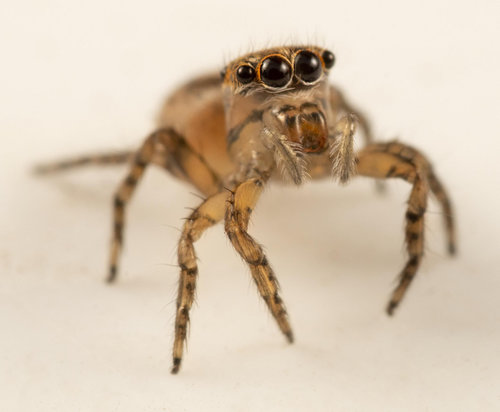
Thyene ogdeni
Thyene ogdeni
No description available.
Thyenula
Thyenula
Thyenula is a spider genus of the Salticidae family (jumping spiders). Its species are largely restricted to Africa.
Read more on Wikipedia →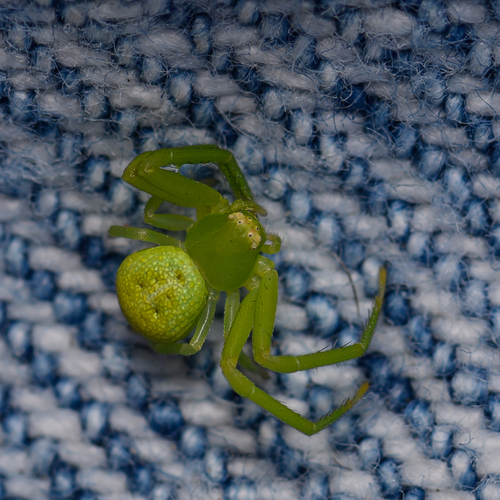
Tucker's Crab Spider
Ansiea tuckeri
Ansiea tuckeri is a species of crab spider in the genus Ansiea. It is found across Africa and serves as the type species for its genus. The species is commonly known as Tucker's crab spider.
Read more on Wikipedia →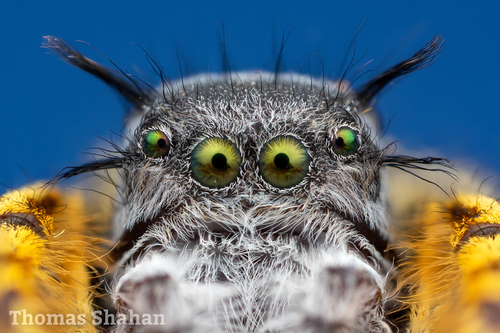
Typical Jumping Spiders
Salticinae
Salticinae is a subfamily of jumping spiders. It includes over 90% of the known species of jumping spiders. The subfamily is divided into two unranked clades: Amycoida and Salticoida.
Read more on Wikipedia →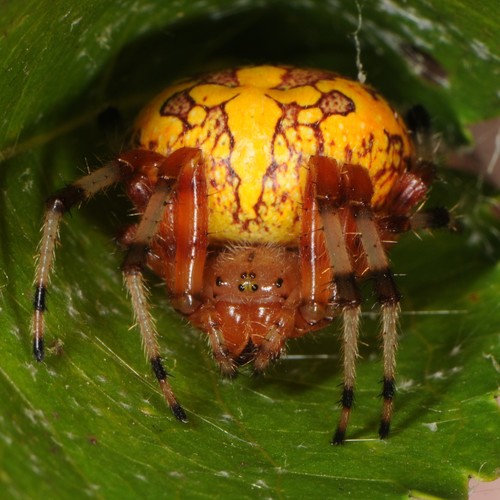
Typical Orbweavers
Araneinae
Orb-weaver spiders or araneids are members of the spider family Araneidae. They are the most common group of builders of spiral wheel-shaped webs often found in gardens, fields and forests. "Orb" was previously used in English to mean "circular", hence the English name of the group. Araneids have eight similar eyes, hairy or spiny legs, and no stridulating organs.
Read more on Wikipedia →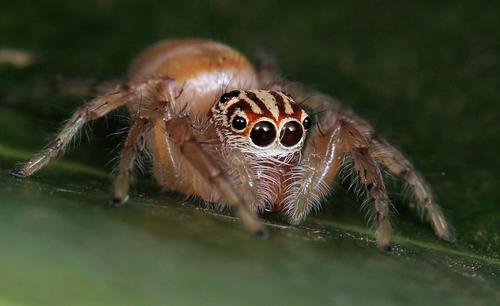
Vicirionessa mustela
Vicirionessa mustela
No description available.
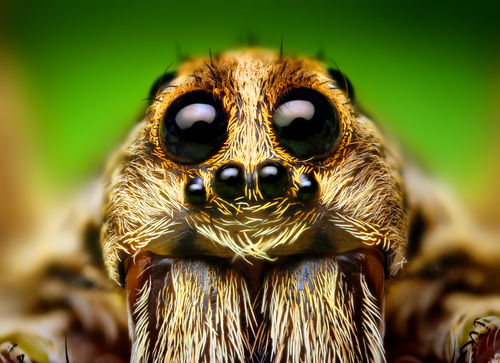
Wolf Spiders
Lycosidae
Wolf spiders are members of the family Lycosidae, from the Ancient Greek word "λύκος" meaning "wolf". They are robust and agile hunters with excellent eyesight. They live mostly in solitude and hunt alone, and do not spin webs. Some are opportunistic hunters pouncing upon prey as they find it or even chasing it over short distances. Some will wait for passing prey in or near the mouth of a burrow.
Read more on Wikipedia →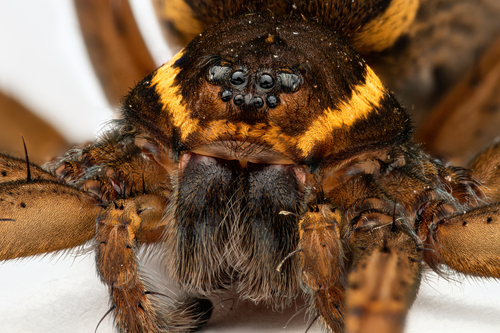
Wolf Spiders and Allies
Lycosoidea
Lycosoidea is a clade or superfamily of araneomorph spiders. The traditional circumscription was based on a feature of the eyes. The tapetum is a reflective layer at the back of the eye, thought to increase sensitivity in low light levels. Lycosoids were then defined by having a "grate-shaped" tapetum. Research from the late 1990s onwards suggests that this feature has evolved more than once, possibly as many as five times, so that the original Lycosoidea is...
Read more on Wikipedia →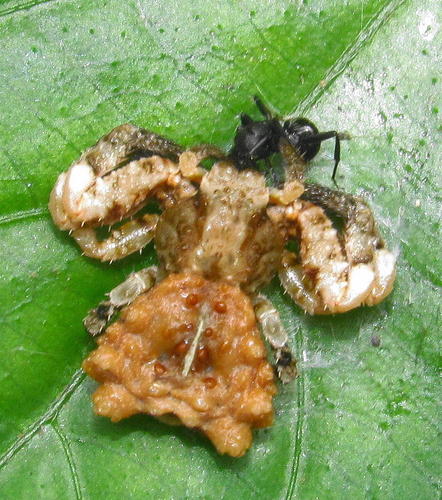
Wrinkled Birddung Crabspider
Phrynarachne rugosa
No description available.